
Stake Roulette Canada
Clear, plain-language explanations of how roulette works on Stake for Canadian players — rules, payouts, volatility and myths — without promising wins or disguised promotions.

What Is Stake Roulette and Why Has It Stayed Popular Among Canadian Players?
Roulette has been around for centuries, yet it still manages to attract both complete beginners and experienced casino players. Part of that comes down to simplicity. Unlike poker or blackjack, roulette does not require complicated decision-making or memorising advanced rules. You place a bet, the wheel spins, and a few seconds later the result appears.
That straightforward structure is exactly why roulette continues to perform well online, especially on platforms like Stake. Canadian players can access the game directly through a browser without visiting a physical casino, and the overall experience feels much more flexible than traditional gambling venues.
Some players open roulette for a quick ten-minute session. Others stay for hours while watching sports or chatting in live dealer rooms. The game adapts surprisingly well to both styles.
At the same time, roulette often creates unrealistic expectations because of how simple it looks on the surface. Many people assume patterns exist, or that repeated outcomes somehow influence future spins. In reality, roulette is still a game of chance built entirely around probability.
How Stake Roulette Works
The mechanics themselves are easy to understand even for someone who has never touched a casino game before.
A roulette wheel contains numbered pockets. In the European version, those numbers run from 0 to 36. Players place wagers on different sections of the table before the dealer spins the wheel and releases the ball. Wherever the ball lands determines the winning outcome.
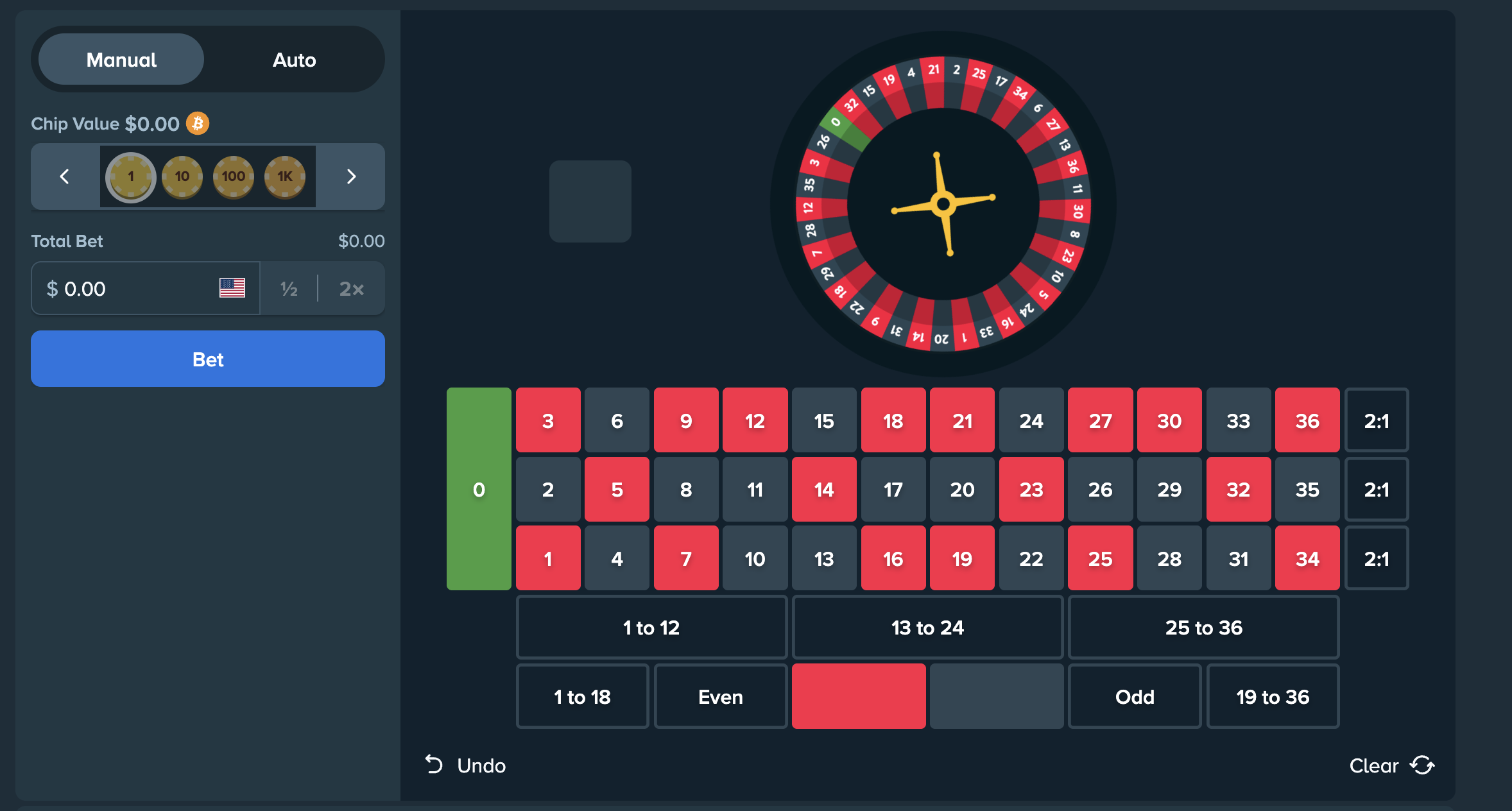
A typical round follows the same rhythm every time:
- choose a roulette table;
- select a bet type;
- place the wager;
- wait for the wheel to stop;
- receive the payout automatically if the prediction was correct.
That's it. No hidden systems. No reaction speed. No way to “control” the ball once the spin begins.
This simplicity is one of roulette's biggest strengths. Even players who usually avoid casino games tend to understand the basics within a few minutes.
Digital Roulette vs Live Dealer Roulette
Stake mainly offers two different roulette experiences, and the choice usually depends on what type of session a player wants.
Digital Roulette
Digital tables are fast and fully automated. There is no live dealer, and outcomes are generated electronically using random number systems.
The pace here is noticeably quicker. Spins happen rapidly, bets can often be repeated automatically, and there's very little downtime between rounds.
For some Canadian players, that speed is appealing because sessions feel smoother and more efficient. Others find it slightly too fast, especially during longer play sessions where bankroll swings can happen quickly.
Live Dealer Roulette
Live roulette slows things down considerably.
Instead of automated graphics, a real dealer spins a physical wheel inside a studio environment streamed in real time. Players watch everything happen live, including the ball movement and betting countdown.
The atmosphere feels closer to a traditional casino floor. There's more anticipation between spins, and many people simply enjoy the human side of the experience.
Mathematically, both versions operate the same way. The difference is mostly pacing and presentation.
Why European Roulette Is Usually the Smarter Option
Not all roulette wheels are identical, and this is where many beginners accidentally make poor choices.
European roulette uses a single zero wheel. American roulette includes both a 0 and a 00 pocket.
That extra pocket changes the odds more than most people realise.
European Roulette
- 37 total pockets;
- house edge around 2.7%;
- RTP close to 97.3%.
American Roulette
- 38 total pockets;
- house edge slightly above 5%;
- RTP around 94.7%.
On paper, the difference looks small. Over longer sessions, though, it becomes significant.
That's why experienced roulette players usually stick with the European format whenever possible. The maths is simply better.
Understanding Roulette Bets Without Making It Complicated
One reason roulette attracts casual players is that the betting structure feels flexible. You can play aggressively with high-risk predictions or keep things relatively conservative with broader bets.
The bets themselves are generally divided into two groups.
Inside Bets
Inside bets focus on individual numbers or very small sections of the table. They offer larger payouts but win less frequently.
Examples include:
- straight-up number bets;
- split bets;
- street bets;
- corner bets.
A straight number bet pays the most because predicting one exact pocket is naturally difficult.
Outside Bets
Outside bets cover larger areas of the wheel. Payouts are smaller, but wins happen more often.
Common outside bets include:
- red or black;
- odd or even;
- high or low;
- dozens.
Many newer Canadian players prefer outside bets at first because the session feels less volatile. Losing streaks are usually shorter, even though the casino advantage never disappears completely.
RTP, House Edge and the Biggest Roulette Misunderstanding
Roulette discussions often include terms like RTP or house edge, but many players misunderstand what those numbers actually mean.
RTP — Return to Player — represents the theoretical amount returned over an extremely large number of spins.
For example, a 97.3% RTP does not mean a player will personally recover 97.3% of their money during a short session. It reflects long-term averages calculated across millions of spins.
Short sessions can look completely different.
A player might double a bankroll quickly, or lose several bets in a row without seeing a meaningful recovery. Both outcomes are normal because roulette outcomes are independent.
This is where one of the most common myths appears.
After several reds in a row, many players start believing black is somehow “due.” In reality, the wheel has no memory. Previous spins do not affect future outcomes.
That idea — known as the gambler's fallacy — traps a surprising number of roulette players.
Roulette Strategies — What They Actually Do
Search online for roulette advice and you'll immediately find systems promising consistency or “safe profit.”
The most famous examples include:
- Martingale;
- Fibonacci;
- Reverse Martingale;
- Flat betting.
These systems change how bets are structured after wins or losses. They can affect session pacing and bankroll swings, but they do not eliminate house edge.
That distinction matters.
For example, Martingale involves doubling the bet after every loss until a win eventually recovers previous losses. On paper it sounds logical. In practice, long losing streaks can escalate bet sizes extremely quickly.
Many players learn this lesson the hard way.
Flat betting — using the same stake every spin — tends to feel slower and less dramatic, but it also avoids aggressive bankroll spikes.
The truth is simpler than many strategy videos suggest: no betting system guarantees profit in roulette.
Why Bankroll Management Matters More Than Strategy
Most experienced players eventually stop chasing “perfect systems” and focus instead on session control.
That usually includes:
- setting a fixed gambling budget;
- deciding stop points before playing;
- avoiding emotional betting after losses;
- separating gambling money from personal expenses.
Some people use percentage-based staking where each wager represents a small portion of the bankroll. Others simply choose fixed amounts and stick to them.
The specific method matters less than consistency.
Ironically, bankroll discipline often has a bigger impact on the overall experience than the actual roulette strategy itself.
Mobile Roulette Changed Player Behaviour
One noticeable shift in recent years is how casually roulette fits into daily routines.
Because Stake works smoothly on mobile browsers, players can launch roulette almost anywhere — during a lunch break, while watching football, or late at night from bed.
That convenience is part of the appeal, but it also changes session psychology.
Longer sessions become easier to drift into without noticing. Fast digital tables especially can create a rhythm where spins blur together surprisingly quickly.
That's why many players now rely on simple safeguards:
- time reminders;
- deposit limits;
- short planned sessions;
- cooldown breaks after losses.
They sound basic, but in practice they help far more than complicated betting systems.
Common Roulette Myths That Still Refuse to Disappear
Roulette has existed long enough to collect plenty of myths and “secret systems.”
Some of the most common include:
- the wheel becomes predictable after repeated outcomes;
- live roulette is easier to beat than digital roulette;
- certain spin timings increase winning chances;
- small bets somehow remove risk completely.
None of those ideas change the underlying mathematics of the game.
Roulette remains random regardless of betting style, wheel speed, or recent outcomes.
Understanding that early usually leads to healthier expectations and calmer decision-making overall.
Last Winners
| Username | Payout | Table | Multiplier |
|---|---|---|---|
| Hidden | CA$1,036.80 | European — corner bet | 9x |
| Hidden | CA$742.50 | Live dealer — dozen | 3x |
| Hidden | CA$486.00 | European — split | 18x |
| Hidden | CA$912.75 | Digital — black / red | 2x |
| Hidden | CA$624.60 | European — straight up | 36x |
| Hidden | CA$558.90 | Live dealer — line | 6x |